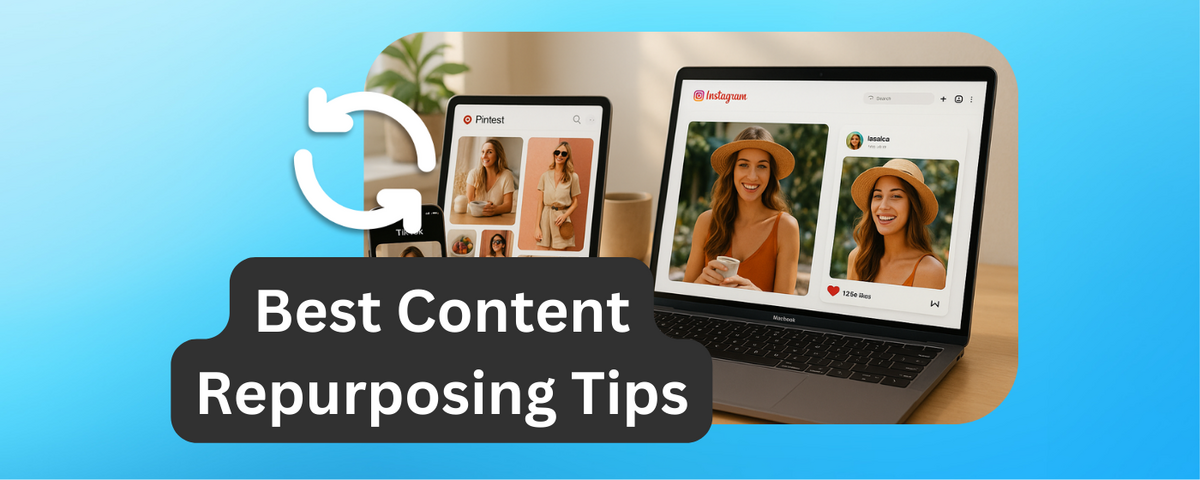
Repurposing influencer content is one of the smartest ways to save time, reduce costs, and maximize your marketing reach.
Instead of creating new posts for every platform, you can reuse influencer photos, videos, or testimonials and tweak them for Instagram, TikTok, YouTube, and more. This approach not only cuts production expenses by up to 60% but also boosts engagement by as much as 400%. Here's the quick process:
- Choose High-Quality Content: Look for influencer posts with great visuals, strong engagement, and a clear connection to your brand.
- Secure Usage Rights: Ensure your agreements cover where and how you can reuse the content.
- Tailor for Each Platform: Adjust the format, tone, and style to match the audience expectations of Instagram, TikTok, LinkedIn, etc.
- Stay Organized: Use tools like Google Drive to manage files and a posting calendar to keep track of when and where content is shared.
- Measure Results: Track metrics like engagement, reach, and conversions to see what works and improve over time.
Repurposing isn't just about saving money - it's about making the most of content that already resonates with audiences. Whether it's turning a TikTok into an Instagram Reel or a testimonial into a blog post, this strategy helps your brand stay visible and consistent across platforms.
How to Repurpose Your Content in 2025 to Post More in Less Time
Getting Started: What to Consider Before Repurposing
Before diving into repurposing influencer content, take a moment to assess its quality and secure clear usage rights. Skipping these steps can lead to wasted effort, legal headaches, or even alienating your audience.
Start by evaluating content quality, obtaining proper permissions, and understanding the unique requirements of each platform. This thoughtful approach not only saves time but also boosts the chances of your repurposed content thriving across multiple channels.
How to Evaluate Content for Repurposing
Choose content with strong visuals, high engagement, and a clear connection to your brand.
First, assess the visual quality. Look for sharp images, good lighting, and professional editing. Poor visuals - like grainy photos or dimly lit videos - can hurt your brand’s credibility, no matter how well the content performed initially. For instance, if an influencer’s video isn’t visually appealing, repurposing it for Instagram won’t magically fix its flaws.
Next, check engagement metrics. Posts with lots of likes, comments, shares, and views typically resonate with audiences, making them great candidates for repurposing. For example, a TikTok video with thousands of shares could be adapted into social media ads or cross-platform content.
Finally, ensure the content aligns with your brand. It should reflect your messaging, values, and target audience. Take Gymshark, for example - they collaborate with influencers whose followers are fitness enthusiasts, ensuring their repurposed content connects with the right audience. Even if a post has impressive engagement, it won’t work if it doesn’t fit your brand’s voice or appeal to your target market.
Select content that’s versatile. Look for assets that can be trimmed into short clips, converted into images, or even transformed into audio. This maximizes the value of a single piece of content. Also, make sure it meets the technical requirements of the platforms you plan to use.
Once you’ve identified high-quality, adaptable content, the next step is securing the necessary permissions.
How to Secure Usage Rights and Permissions
Getting usage rights is non-negotiable. Without them, you risk legal trouble, reputational harm, and strained relationships with influencers. The best way to avoid these pitfalls? Build content rights management into your influencer agreements from the start.
After selecting content, ensure all legal permissions are squared away before moving forward.
Your influencer agreement should clearly define the scope of usage. Specify which platforms the content can appear on, how long you’ll have the rights, and whether additional compensation is required for repurposing the content in paid campaigns. It’s also important to outline whether your brand can edit or modify the content and clarify which rights, if any, remain with the influencer. For instance, if you want to use an influencer’s video in a paid ad, your agreement must explicitly grant those rights.
Document everything. Relying on verbal agreements is risky when dealing with content that could generate significant revenue or exposure. Make sure your agreements cover specific content pieces, allowable modifications, and usage timeframes.
Some brands simplify this process by using platforms with built-in content rights management. For instance, Statusphere connects brands with creators to produce rights-ready content at scale, eliminating the need for individual permission requests and streamlining the repurposing process.
Be upfront about compensation. Repurposing content for organic social media posts often involves different terms than using it for paid ads. Clearly communicate your intentions and ensure influencers are fairly compensated.
Maintaining open communication is also crucial. Keep influencers informed about how their content is being used and share performance results when appropriate. This transparency builds trust and strengthens future collaborations.
Lastly, decide how you’ll handle credit and attribution. Tagging the original creator can enhance transparency and deepen your relationship with the influencer, though it might not always align with your campaign goals.
For more complex cases, consult legal counsel to ensure compliance with industry-specific or regional regulations. Tools like DriveEditor can help manage the editing process while respecting content rights, making your workflow smoother and more efficient.
How to Adapt Influencer Content for Different Platforms
Each social media platform comes with its own set of rules, preferences, and audience expectations. To make influencer content work effectively across various platforms, you need to tailor it to fit these unique demands. This means understanding the formats, tones, and styles that resonate with users on each platform.
For instance, LinkedIn thrives on professional and insightful content, while TikTok is all about authentic, entertaining, and trendy material. Pinterest, on the other hand, focuses on inspiration and visual discovery, making high-quality images and infographics a must.
By recognizing these nuances, you can reshape influencer content to align with the specific expectations of each audience. Take a makeup tutorial as an example: it could be shared as a full-length video on YouTube, broken into short clips for TikTok and Instagram Reels, turned into a step-by-step carousel post for Instagram, and expanded into a detailed blog post for your website. Let’s dive deeper into how to adapt video, image, and text content for these platforms.
Video Content: How to Optimize for Multi-Platform Use
Video content is incredibly versatile, but every platform has its own requirements for format and editing. For example, Instagram Reels and TikTok favor vertical videos that are short and engaging - typically between 15 and 60 seconds. YouTube Shorts also supports vertical videos but allows up to 60 seconds.
To make the most of longer videos, extract the most engaging moments - especially within the first three seconds - to grab attention in short-form formats. For example, a 5-minute cooking tutorial could be condensed into a 30-second clip showcasing the final dish or a standout technique.
Tools like DriveEditor simplify the process of repurposing videos. You can trim, resize (to the popular 9:16 vertical format), and add text overlays for captions or calls-to-action directly within Google Drive. Adjusting brightness, contrast, and cropping footage is also straightforward, ensuring the content meets each platform’s technical standards while staying visually appealing.
A great example of this strategy in action is Peach & Lily. In 2023, they repurposed a TikTok UGC video by @jordyn_wood into an Instagram Reel. By tweaking the format and caption, they boosted engagement and improved cross-platform visibility.
How to Repurpose Static Images and Graphics
Static images from influencers can be transformed to fit different platforms and their unique audience needs. A single high-quality photo can serve multiple purposes with a few adjustments.
Start by addressing technical requirements. For example, Instagram Stories require vertical images (1080x1920 pixels), while carousel posts work best with square or slightly rectangular images. For paid ads, resizing images to meet platform-specific dimensions is key. Adding overlays with text, branded elements, or calls-to-action can further enhance the visuals.
The goal is to adapt the image without losing quality. For instance, an influencer’s Instagram photo could be reimagined as a visual quote or meme for Twitter or Pinterest. Carousel posts can also tell a story by breaking a single image into multiple frames.
Pinterest is a great example of where text overlays shine. Adding descriptive text helps users quickly grasp the image’s value and context, increasing engagement. Glossier has successfully used this approach, adapting influencer content with strategic timing and format adjustments to extend its reach while keeping the brand consistent.
For paid ads, the process becomes even more deliberate. Resize the images, include clear calls-to-action, and ensure the design guides viewers toward a specific action, like clicking a link or visiting a website.
How to Convert Visual Content into Text-Based Formats
Influencer captions, testimonials, and quotes often contain valuable insights that can be repurposed into text-based formats like blogs, LinkedIn articles, or microblogs. This not only broadens the reach of the content but also allows you to present the influencer’s message in a new way.
Start by identifying key quotes or ideas from the influencer’s content. For instance, a detailed caption about a product’s benefits could be expanded into a blog post with added context, tips, and supporting information. You could also turn standout quotes into visual graphics for Pinterest or Twitter, or use them as copy for email campaigns.
This approach helps you reach different audiences while extending the content’s relevance. For example, a fitness influencer’s motivational caption could become a LinkedIn article on workplace wellness, a series of tweets, or even a newsletter feature.
For email campaigns, incorporating influencer testimonials and quotes adds a layer of authenticity and social proof. Vieve demonstrated this effectively by using a .gif of customer and creator photos sourced from Instagram in an email campaign to showcase product usage and drive traffic to their social channels.
LinkedIn offers unique opportunities to expand influencer content into professional formats. A casual product review, for instance, could be transformed into a detailed case study or industry insight piece tailored to a professional audience.
When adapting visual content into text, maintaining the influencer’s voice is crucial. Adjust the tone to suit the platform - professional for LinkedIn and more casual for Twitter or Facebook - while preserving the original message’s impact.
| Platform | Content Adaptation | Key Requirements |
|---|---|---|
| High-res images, short videos | Resize, add overlays, and use concise captions | |
| TikTok | Vertical, short videos | Trim to 15–60 seconds, include captions, be authentic |
| YouTube Shorts | Vertical, short videos | Up to 60 seconds; grab attention early |
| Mixed media, longer videos | Vertical format preferred, up to 2 minutes, strong hook | |
| Images, short text, GIFs | Use visual quotes, memes, and impactful messages | |
| Articles, testimonials | Professional tone with detailed insights | |
| High-quality images, infographics | Add descriptive overlays and inspirational visuals |
sbb-itb-0482353
How to Create a Workflow for Repurposing and Organizing Content
To make the most of influencer content, you need a well-organized workflow. Without one, you risk wasting time searching for files, reposting the same content by mistake, or missing opportunities to expand your reach. By focusing on centralized storage, consistent editing, and careful scheduling, you can create a system that’s easy for your team to follow and ensures a steady flow of content.
Start by setting up a centralized repository. Google Drive works great for this, serving as a single hub for all your influencer content and any repurposed assets. Within Drive, organize files into a clear hierarchy based on influencer name, content type (like video, image, or text), and platform destination. For example, your structure might look like: "Influencer Content > JordynWood > Videos > Instagram_Ready" or "Influencer Content > Seasonal_Campaign > Q4_2025 > TikTok_Clips."
File naming conventions are key to keeping everything organized, especially as your content library grows. Use a consistent format such as: [InfluencerName]_[ContentType]_[PlatformDestination]_[Date]_[Version]. A file named "JordynWood_Video_Instagram_112125_V2.mp4" tells you exactly who created it, what type of content it is, where it’s meant to go, when it was made, and which version it is. This way, you avoid confusion when juggling multiple versions for different platforms.
For video editing, tools like the DriveEditor Chrome extension can save time by letting you edit directly within Google Drive. This not only speeds up the process but also reduces the risk of version conflicts.
Once your files are neatly organized, the next step is to map out a posting schedule. A repurposing calendar helps you plan when and where to share content, ensuring consistent engagement across platforms.
How to Build a Repurposing Calendar
A repurposing calendar is all about strategic spacing. Instead of posting the same content everywhere at once, spread it out to keep your audience engaged without overwhelming them.
Your calendar should outline which content pieces will be repurposed, the platforms they’ll appear on, and the posting schedule. For instance, a makeup tutorial from an influencer could be uploaded to YouTube on Monday, followed by short clips on TikTok on Wednesday, and finally as Instagram Reels on Friday. This staggered approach lets each platform’s algorithm do its job while keeping your audience interested across channels.
Timing also matters. Instagram tends to perform better during early mornings and evenings, while TikTok sees activity throughout the day. Align your calendar with these peak engagement windows, scheduling your best-performing content when your audience is most active and saving less critical posts for quieter times.
To avoid overwhelming your followers, leave a 2–3 day gap between similar posts on different platforms. For example, if an influencer posts a product demo video, you could share it first on their original platform, then on your brand’s channels, and finally in paid ads over a 7–10 day period. This ensures a steady rhythm without being repetitive.
Keep an eye on posting frequency as well. A general rule of thumb is 1–2 posts daily on Instagram, 3–5 on TikTok, and 1–3 on LinkedIn. Your calendar should help you stay within these limits while maintaining a consistent flow.
How to Track and Organize Repurposed Assets
With your calendar in place, it’s time to get serious about tracking your content. A master spreadsheet can help you manage all the moving parts. Include key details like the original source URL, influencer name, creation date, usage rights expiration, variations created, platforms posted on, posting dates, and performance metrics.
To make tracking easier, use color-coding and status labels. Categories like "Ready to Post", "In Review", "Posted", and "Archived" let you quickly see where each piece of content is in the process. This system ensures nothing gets overlooked or accidentally reposted.
For video editing, tools like DriveEditor’s "Copy/Paste Editing Presets" can save time and maintain consistency. You can set up presets for different platforms - like vertical 1080x1920 for TikTok or square 1080x1080 for Instagram Reels - and apply them across multiple videos in seconds. This is a game-changer for marketers managing large volumes of content.
Metadata management is another crucial step. Include details like usage rights expiration dates, performance metrics, and any brand guidelines in your file names or metadata. For videos, note resolution and aspect ratio to avoid confusion when dealing with multiple versions. This level of detail helps you stay organized and ensures you’re always working with the right files.
A tagging system can also make life easier. Use keywords like "high-engagement", "seasonal", or "product-focused" to quickly find content that fits specific campaigns or promotions. This is especially handy when you’re pulling together assets for a themed campaign or seasonal push.
Finally, regular workflow audits can help you identify and fix bottlenecks. Track metrics like the average time it takes to repurpose and post content, the number of variations created per asset, and consistency in posting frequency. If it currently takes five days to repurpose and post a video across three platforms, look for ways to cut that time down. Pinpoint delays - whether in approvals, editing, or scheduling - and focus on improving those areas.
| Workflow Component | Tool/Method | Key Benefit |
|---|---|---|
| File Storage | Google Drive with folders | Centralized access and team collaboration |
| Video Editing | DriveEditor Chrome extension | Edit directly within storage platform |
| Asset Tracking | Master spreadsheet with labels | Prevents duplication and tracks performance |
| Scheduling | Staggered posting calendar | Reduces audience fatigue across platforms |
| Consistency | Copy/Paste Editing Presets | Maintains brand standards efficiently |
How to Measure the Impact of Repurposed Content
Once your workflow is in place, the next step is to analyze the results. Tracking performance metrics helps you understand what resonates with your audience and what doesn’t, allowing you to fine-tune your approach. This process ensures that every tweak to your content drives meaningful engagement.
Key Metrics to Track Performance
Start by focusing on engagement rates, which measure how actively your audience interacts with your content compared to its reach or follower count. High engagement rates - likes, comments, shares, and saves - indicate that your repurposed content is connecting with viewers.
Next, look at reach and impressions to evaluate your content’s visibility. Reach refers to the number of unique users who see your content, while impressions count the total views. If your reach increases but engagement stays stagnant, it might mean your content is being seen but isn’t compelling enough to spark interaction.
Click-through rates (CTR) are another critical metric. They show the percentage of viewers who take action by clicking on a link or call-to-action in your content. Pair CTR with conversion tracking - whether it’s purchases, sign-ups, or downloads - to measure how effectively your repurposed content drives tangible results. Tools like unique tracking links, promo codes, or UTM parameters can help you attribute these actions accurately.
Don’t overlook follower growth and sentiment analysis. Follower growth reflects your ability to attract new audiences, while analyzing comments and messages provides qualitative insights into how people feel about your brand.
By keeping an eye on these metrics, you can identify what’s working and make informed adjustments to your strategy.
How to Use Performance Data to Optimize Future Efforts
Once you’ve gathered your data, search for trends in your top-performing content. For instance, are short-form videos outperforming static posts? Do collaborations with certain influencers drive better results on specific platforms? Use these insights to refine your content strategy and distribution methods.
A/B testing is a powerful way to fine-tune your approach. Experiment with different captions, formats, or posting times. For example, you could post the same influencer video with varying calls-to-action on different days to see which version drives a higher CTR.
A relevant example from 2023 comes from Peach & Lily. They repurposed a successful TikTok video by creator @jordyn_wood into an Instagram Reel. By tailoring the format and timing for Instagram’s algorithm, they achieved higher engagement and reach.
To stay organized, establish baseline metrics for engagement, conversions, and CTRs. Use these as benchmarks to set measurable goals, like increasing your CTR by 10% in the next quarter. Comparing your performance against industry averages and past campaigns will provide a clearer picture of your progress.
Centralized tools like dashboards can simplify data tracking. Platforms such as Instagram Insights, TikTok Analytics, and YouTube Studio provide valuable metrics, and consolidating this data in one place makes it easier to spot trends and allocate resources effectively.
Regular ROI analysis is also essential. Calculate the cost of creating and repurposing content against the revenue it generates. If a specific type of content consistently delivers strong returns, consider investing more in that format. On the other hand, if certain platforms or formats underperform, it’s time to reconsider their role in your strategy.
For instance, Vieve successfully optimized ROI by incorporating Instagram GIFs of customer and creator photos into their email campaigns. This approach increased email engagement and drove traffic to their social accounts, creating measurable results across multiple channels.
Finally, document your findings. Create playbooks that outline the best-performing formats, ideal posting times, and effective caption styles for each platform. These resources will be invaluable for maintaining consistency and improving future campaigns as your team grows.
Regular reviews - whether monthly or quarterly - will keep you aligned with current trends and allow you to address challenges early. The goal isn’t to achieve perfection but to continuously improve by acting on real data and actionable insights.
Conclusion and Key Takeaways
Repurposing influencer content across multiple platforms isn't just a good idea - it’s a must if you want to get the most out of your marketing efforts. By reusing and reshaping a single piece of content, you can extend its shelf life, expand its reach, and boost your ROI, all while maintaining a steady flow of material for your audience.
But the real magic happens when you focus on customization. Simply copying content from one platform to another won’t cut it. Each platform has its own vibe and audience expectations, so tweaking the content to fit is crucial. For example, a TikTok video can easily become an Instagram Reel with a few caption changes or even be reimagined as a series of static posts for LinkedIn.
Another critical piece of the puzzle is usage rights. Locking down these rights upfront saves you from legal headaches later and makes the repurposing process much smoother. Make sure your influencer agreements cover these permissions, and always give proper credit to creators - it’s key to maintaining strong relationships and staying transparent.
Staying organized is half the battle. A repurposing calendar and tracking system can help you keep everything on schedule and ensure no content gets overlooked. Tools like Drive Editor can simplify video editing, letting you quickly adapt influencer content for different platforms without spending hours on production.
Don’t forget to keep an eye on performance metrics. Regularly reviewing engagement, reach, and conversion data will help you understand what’s working and what’s not. The goal isn’t to get everything perfect - it’s to keep improving based on what you learn.
And remember, repurposing isn’t limited to social media. Influencer content can add value to email campaigns, website visuals, or even print materials. By thinking outside the box, you’ll uncover fresh ways to connect with your audience and reinforce your brand across all channels.
The brands that are winning with repurposed influencer content are the ones treating it as a deliberate, strategic process - not an afterthought. A single piece of content, when used wisely, can deliver far more value than you might expect.
FAQs
How can I tailor repurposed influencer content to fit the unique style and audience of each social media platform?
To make the most of influencer content across different platforms, it's crucial to understand what works best for each audience and format. For instance, Instagram thrives on polished, visually stunning posts, while TikTok focuses on short, engaging, and unfiltered videos. Adapting the tone, style, and length of your content ensures it connects with users on each platform.
When dealing with video content, tools like DriveEditor can be a game-changer. This tool lets you trim, crop, and customize videos directly within Google Drive, streamlining the process of creating platform-specific edits. By aligning your content with the unique vibe of each platform, you can maintain a cohesive brand presence while boosting engagement across your social channels.
What should I keep in mind when obtaining rights to repurpose influencer content across different platforms?
When reusing influencer content across various platforms, it’s crucial to secure the appropriate usage rights to steer clear of legal or copyright complications. Begin by carefully reviewing the agreement with the influencer to determine what permissions you have. For instance, can you edit the content? Are you allowed to share it on multiple platforms or use it in paid advertising campaigns? These details should be crystal clear.
Make sure the agreement also outlines how long you can use the content and if there are any restrictions tied to specific platforms. If you need to make edits, tools like DriveEditor can streamline the process. This software lets you quickly tweak videos to meet the unique requirements of each platform, helping you maintain a consistent and engaging presence across all your social media channels.
How can I track the performance of repurposed influencer content for engagement and conversions?
To gauge how well repurposed influencer content is performing, keep an eye on key performance indicators (KPIs) like engagement rate, click-through rate (CTR), and conversion rate. These metrics help you understand if the content is connecting with your audience and encouraging them to take action.
Leverage platform-specific analytics tools to track engagement metrics such as likes, comments, shares, and saves. For conversions, focus on actions like website visits, sign-ups, or purchases, using tools like UTM parameters or built-in analytics dashboards. Regularly analyze these metrics across different platforms to spot patterns and refine your approach for stronger results.